A great sauna experience is about more than simply turning up the heat. The ideal sauna environment depends on three important factors working together: temperature, humidity and air circulation. When these elements are properly balanced, a sauna can provide a comfortable, relaxing and enjoyable environment in your home.
At Waterworx Pools & Hot Tubs, we understand that a well-designed sauna is about more than its appearance. The way heat moves through the room, how moisture affects the air and how fresh air reaches the people using the sauna all contribute to the overall experience.
Whether you are planning a new sauna or improving an existing one in Abbotsford, Mission, Vancouver, Burnaby, Langley, Maple Ridge or Chilliwack, understanding these three fundamentals can help you make informed decisions.
1. Temperature: The Foundation of a Good Sauna
Temperature is one of the most noticeable factors in a sauna. It determines how much heat your body receives and plays a major role in how comfortable the session feels.
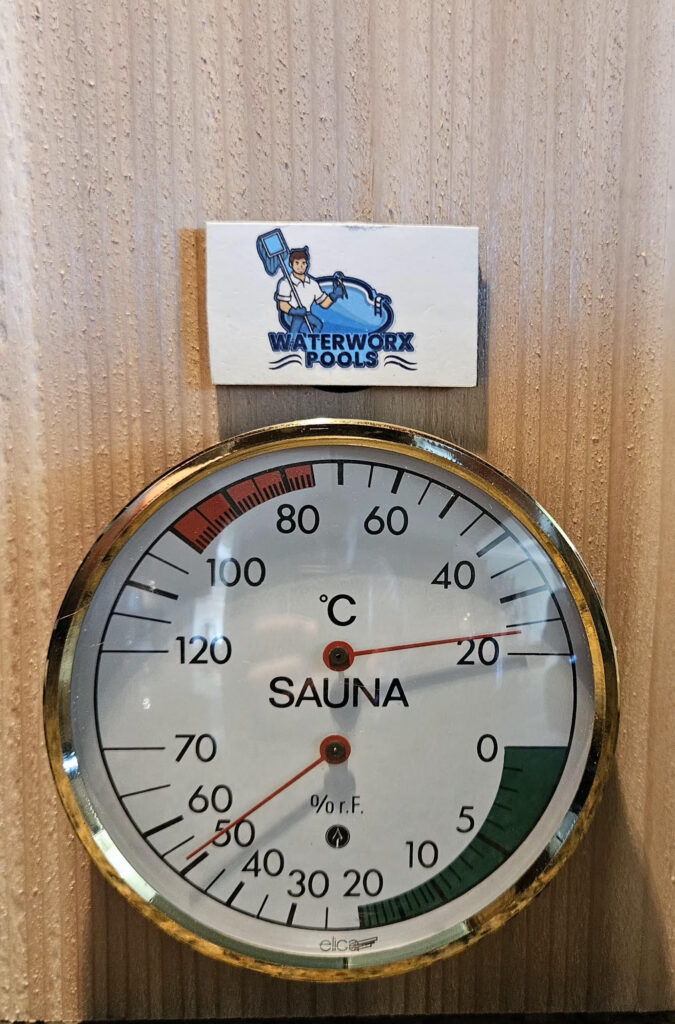
A sauna thermometer measures the air temperature inside the room, helping users monitor the conditions and adjust the heater as needed.
In a traditional Finnish-style sauna, the heater warms the air and the stones. Heat reaches the body through a combination of convection, radiation and contact with the surrounding warm environment. As your body absorbs heat, it responds by increasing blood flow to the skin and producing sweat to help regulate its temperature.
However, a higher temperature does not automatically mean a better sauna experience.
If the sauna is excessively hot, the session may become uncomfortable and increase the risk of heat-related illness. If the temperature is too low for the user’s preference and sauna type, the experience may not deliver the desired feeling of warmth.
The goal is to maintain a suitable, consistent temperature that matches the sauna design, manufacturer recommendations and the user’s comfort level.
Why it matters: Proper temperature control makes the sauna experience more predictable and helps users manage their exposure to heat.
2. Humidity: Understanding the Role of Moisture
The second important factor is humidity, which describes the amount of moisture in the air. In most residential saunas, relative humidity is measured using a hygrometer.
Humidity affects how heat feels against your skin. When humidity increases, sweat evaporates less readily, reducing one of the body’s main cooling mechanisms. As a result, the same air temperature can feel more intense when humidity is higher.
In a traditional Finnish sauna, water can be poured over the hot stones to produce a burst of steam, commonly known as löyly. This temporarily increases the moisture in the air and creates a stronger sensation of heat.
It is important to understand that a traditional sauna is not intended to maintain the same high humidity as a steam room. A steam room operates under substantially different temperature and moisture conditions.
Humidity also needs to be considered from a building-maintenance perspective. Excessive moisture that remains in a sauna after use can contribute to condensation, material deterioration and mould growth if the room is poorly ventilated or inadequately dried.
Why it matters: A hygrometer helps users understand changing moisture conditions, while proper ventilation and drying help protect the sauna structure over time.
3. Air Circulation: The Often-Overlooked Key to Comfort
The third factor is air circulation, and it is one of the most important aspects of sauna design.
A sauna can reach the desired temperature and have suitable humidity, yet still feel uncomfortable if the air does not circulate properly.
A well-designed sauna ventilation system typically includes a fresh-air intake and an exhaust outlet. Depending on the sauna type, heater, room layout and ventilation method, additional vents or mechanical ventilation may be required.
Here is how the system works.
Fresh-air intake
The intake introduces fresh replacement air into the sauna. Its position must be coordinated with the heater and the room’s airflow pattern so that incoming air can mix with the heated air without creating an uncomfortable cold draft.
Air movement throughout the room
As the heater warms the air, convection helps move it around the sauna. Properly designed ventilation supports air exchange in the occupied area, where people are sitting and breathing.
Without an effective airflow pattern, heat can become unevenly distributed, leaving some areas noticeably hotter than others.
Exhaust ventilation
The exhaust provides a route for used air to leave the sauna. This helps maintain air exchange and can assist with removing excess moisture after a session.
The exact position of the intake and exhaust vents should follow the sauna and heater manufacturer’s specifications. There is no single vent arrangement that is appropriate for every sauna.
Why it matters: Good ventilation supports comfortable breathing, effective air exchange, more consistent conditions and moisture management. It also helps the sauna dry properly between sessions.
Why All Three Factors Must Work Together
Temperature, humidity and ventilation are interconnected. Adjusting one can affect the others.
For example, increasing the temperature changes the way your body experiences the heat. Adding water to hot stones increases moisture temporarily and can make the heat feel more intense. Changing ventilation affects the movement of warm, moist air and the rate at which air is exchanged.
A useful way to think about sauna design is that the heater creates the heat, the water and stones influence the moisture experience, and the ventilation system manages the movement and replacement of air.
No single measurement tells the whole story. A thermometer cannot measure humidity, a hygrometer cannot determine whether air is being exchanged adequately, and vents alone cannot guarantee a comfortable temperature.
The best sauna experience comes from designing, monitoring and maintaining all three elements as a complete system.
Other Features That Improve Your Sauna Experience
Beyond temperature, humidity and ventilation, several additional details contribute to comfort and long-term performance:
• Comfortable benches: Proper bench height and depth allow users to sit or recline comfortably and influence their position relative to the warmer air near the ceiling.
• Suitable lighting: Soft, appropriately rated lighting can create a relaxing atmosphere without introducing unnecessary heat or electrical hazards.
• Quality materials: Sauna-suitable wood and correctly specified building materials help the room withstand repeated heating and cooling cycles.
• Effective moisture management: Appropriate drainage where needed, good construction details and post-session drying help protect surfaces and materials.
• Reliable controls: Correctly installed temperature controls and sensors help the heater operate as intended.
• Regular cleaning and inspection: Clean benches, unobstructed vents and well-maintained equipment support a pleasant and hygienic environment.
These details may seem secondary, but together they help turn a basic heated room into a thoughtfully designed home wellness space.
Sauna Safety: Comfort Should Always Come First
A sauna should feel relaxing, not overwhelming. Follow the manufacturer’s operating instructions, begin with shorter sessions, stay hydrated and allow your body to cool down afterward.
Leave the sauna if you experience dizziness, nausea, headache, unusual weakness or difficulty breathing. People who are pregnant or have cardiovascular conditions, heat sensitivity or other relevant medical concerns should seek advice from a qualified healthcare professional about safe sauna use.
Never block ventilation openings, and ensure that heaters, electrical components and ventilation systems are installed according to the manufacturer’s specifications and applicable requirements.
Planning a Sauna in the Fraser Valley or Greater Vancouver?
If you are considering a new sauna or need help maintaining an existing one, understanding the relationship between heat, humidity and ventilation is a useful starting point.
Waterworx Pools & Hot Tubs brings decades of experience in pools, hot tubs, saunas and steam rooms. Our team serves homeowners and properties across Abbotsford, Mission, Langley, Maple Ridge, Chilliwack, Vancouver and surrounding communities, helping customers care for and maintain their recreational and wellness installations.
Whether you are exploring a sauna for your home, upgrading an existing setup or looking for professional sauna and steam-room service, proper equipment, thoughtful design and regular maintenance all make a difference.
Visit Waterworx Pools & Hot Tubs to learn more about our services or contact our team to discuss your project.
Frequently Asked Questions About Sauna Temperature, Humidity and Ventilation
What are the three most important factors in a good sauna?
Temperature, humidity and air circulation are three essential factors. Together, they influence perceived heat, comfort, air exchange and moisture management.
What does a sauna thermometer measure?
A thermometer measures air temperature. It helps users monitor the sauna’s heat level, but its reading depends on where the instrument is installed because temperatures can vary throughout the room.
What is a hygrometer used for in a sauna?
A hygrometer measures humidity, usually expressed as relative humidity. In a traditional sauna, humidity can change significantly when water is poured over the hot stones.
Why does a sauna need an intake and an exhaust vent?
The intake supplies replacement air, while the exhaust provides a route for air to leave. Together, they support air exchange, comfort and moisture removal. Their placement depends on the sauna design and heater manufacturer’s instructions.
Can poor ventilation affect a sauna?
Yes. Inadequate ventilation can contribute to stuffy conditions, uneven heat distribution and slow drying. Persistent moisture can also damage materials and encourage mould growth.
Does a hotter sauna always provide a better experience?
No. Higher temperatures increase heat exposure and may become uncomfortable or unsafe. The appropriate conditions depend on the sauna type, the manufacturer’s guidance and the user’s tolerance.
Waterworx Pools & Hot Tubs
Helping you enjoy your pool, hot tub, sauna and wellness space throughout the Fraser Valley and Greater Vancouver.
Copyright ©️ / Waterworx-pools.com – All Rights Reserved –